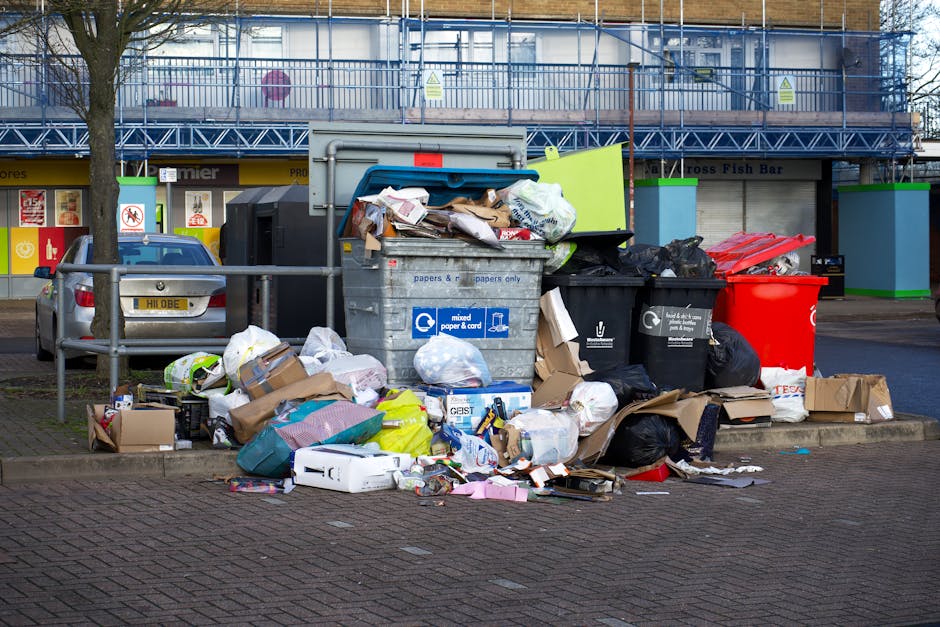
Avoid hidden rubbish removal charges in Dalston
If you are trying to avoid hidden rubbish removal charges in Dalston, you are probably already tired of vague quotes, surprise add-ons, and the awkward moment when the price changes right before the van leaves. Fair enough. Nobody enjoys that. Whether you are clearing a flat, getting rid of builders' rubble, or shifting a few bulky items on a damp Tuesday morning, clear pricing matters just as much as the collection itself.
This guide breaks down how rubbish removal pricing should work, the warning signs that fees may be lurking in the small print, and the simple checks that help you stay in control. You will also see when it makes sense to compare services like waste removal, house clearance, or flat clearance depending on what you need removed. The goal is straightforward: fewer surprises, better value, and a smoother job from start to finish.
Table of Contents
- Why hidden charges matter
- How rubbish removal pricing works
- Key benefits of getting pricing right
- Who needs this and when it makes sense
- Step-by-step guidance
- Expert tips for better results
- Common mistakes to avoid
- Tools, resources and recommendations
- Law, compliance and best practice
- Options and comparison table
- Case study or real-world example
- Practical checklist
- Conclusion
- Frequently asked questions
Why Avoid hidden rubbish removal charges in Dalston Matters
Hidden charges are not just annoying; they can change the whole value of the job. A cheap-looking quote can become expensive if the provider adds fees for labour, access, loading time, parking, congestion, floor level, item type, or disposal weight. In a busy place like Dalston, where access can be tight and parking is often a real-world issue, those extras can stack up quickly.
The problem is not always dishonesty. Sometimes it is simply poor quoting. But from your point of view, that distinction does not change the bill. If you expected one price and got another, the job has already become stressful. And let's be honest, rubbish removal is usually happening during a life moment that is already a bit messy: moving house, clearing after renovations, dealing with a garage that has become a storage cave, or finally tackling the loft. You do not need billing drama on top.
Clear pricing also builds trust. A company that explains what is included, what might cost extra, and how the quote is calculated is usually easier to deal with throughout the job. That is especially useful if you are arranging something broader like home clearance, garage clearance, or loft clearance, where the amount of waste can change once the team starts working through the property.
Practical takeaway: the best rubbish removal quote is not always the lowest one; it is the clearest one. If you can understand exactly what you are paying for before the van arrives, you are already ahead.
How Avoid hidden rubbish removal charges in Dalston Works
The safest way to avoid surprise costs is to understand how waste removal companies normally price a job. Most providers base their quote on a mix of volume, weight, item type, labour time, access difficulty, and disposal costs. Some will give you a fixed estimate from photos. Others may offer an on-site assessment. Both can be fair, but only if the process is explained properly.
Here is what a transparent quote usually covers:
- Collection and loading from the agreed location.
- Transport to the disposal or recycling point.
- Disposal costs where relevant, especially for heavier or mixed waste.
- Labour for carrying items, sorting waste, and safe handling.
- Access factors such as stairs, tight hallways, or long carries from the property.
- Special items that need extra handling, for example large furniture or builder's waste.
What causes trouble is the gap between what a customer expects and what a provider assumes. A quote based on "one van load" can be very different from a quote based on actual item list and access conditions. A small pile outside the front door is one thing. A third-floor flat with no lift, a narrow stairwell, and a skip-bag full of mixed rubble is another. Same postcode. Very different workload.
If your job involves bulky items, it may be worth checking related services such as furniture disposal or furniture clearance. That can help you match the service to the waste type, which is one of the easiest ways to keep costs predictable.
Key Benefits and Practical Advantages
Being careful about pricing gives you more than cost control. It gives you peace of mind, better decision-making, and a smoother customer experience. In practice, that can make a real difference.
1. You protect your budget
The obvious one. When you know what is included, you can plan properly. That matters whether you are paying from personal savings, business funds, or moving costs already stretched by the rest of life.
2. You compare companies more fairly
Two quotes that look different on paper may actually be structured differently. One might be low because it excludes labour. Another may look higher because it already includes everything. Once you compare like with like, the better value usually becomes clearer.
3. You reduce last-minute stress
There is a special kind of irritation that comes with standing in a doorway while someone re-checks the job and announces a new fee. Not ideal. Transparent pricing avoids that little panic.
4. You can choose the right service
Different jobs need different approaches. A small office declutter may fit an office clearance, while construction debris may be better handled through builders waste clearance. Matching the service to the waste type usually lowers the chance of unexpected extras.
5. You are more likely to get better handling and disposal
Companies that quote clearly often operate more consistently. That can be a good sign for sorting, recycling, lifting safety, and communication. It is not a guarantee, of course, but it is a positive signal.
Who This Is For and When It Makes Sense
This advice is useful for almost anyone arranging waste collection in Dalston, but it becomes especially important in a few common situations.
- Homeowners clearing a property after years of accumulated items.
- Tenants needing a quick and tidy flat clearance before moving out.
- Landlords dealing with left-behind furniture, rubbish, or mixed household waste.
- Tradespeople handling renovation debris, packaging, timber, and heavier materials.
- Small businesses needing office clearance or regular business waste removal.
- Anyone with awkward access such as top-floor flats, shared stairwells, or limited parking.
It also makes sense if you are comparing options for business waste removal or planning a larger clearance where the job may grow once you start sorting. Truth be told, plenty of people underestimate what is in the cupboard under the stairs until they open it and realise it is somehow full of broken chairs, old paint tins, and half a box of Christmas decorations. Happens more often than you think.
If you are only getting rid of one item, pricing should still be clear. If you are clearing an entire floor, a clear process becomes even more important because the chance of scope creep rises fast.
Step-by-Step Guidance
If you want to avoid hidden rubbish removal charges in Dalston, use a simple process. Nothing fancy. Just disciplined and clear.
- List everything that needs removing. Be specific. "Sofa, mattress, two desks, four black bags, and mixed cardboard" is much better than "some stuff."
- Take photos from different angles. Include access points, stairs, side passages, and anything that might affect loading.
- Ask what the quote includes. Check labour, transport, disposal, and any minimum charge. Don't assume.
- Ask what might cost extra. Heavy items, special waste, urgent timing, parking, or extra labour are common candidates.
- Confirm the service type. A house clearance, garden clearance, garage clearance, or builders waste clearance may be priced differently.
- Check whether the quote is fixed or estimated. A fixed quote gives more certainty. An estimate may still be fine if the rules are clear.
- Get the terms in writing. Email, message, or order confirmation is better than a vague phone promise.
- Reconfirm before collection day. If anything has changed, say so before the van turns up.
That last point saves more arguments than people realise. If the pile has grown by a few extra bags since the photos were taken, it is better to say it early. A decent provider will usually appreciate the honesty.
Expert Tips for Better Results
A few small habits can make a surprisingly large difference to your final bill. These are the things experienced customers tend to do well.
Be precise about waste types
Mixed waste can cost more than clean, separated material. If you have furniture, garden waste, and builder's rubble all together, say so. That helps the provider quote properly and avoids the dreaded "oh, that changes things" moment.
Ask for a plain-English breakdown
You do not need jargon. Ask: "What exactly am I paying for?" If the answer is clear and calm, good sign. If it feels slippery, maybe not.
Check access honestly
It is tempting to describe access as "fine" when there are actually three flights of stairs and a shared hallway that is barely wide enough for a mattress. Be upfront. Accurate access details can prevent re-pricing later.
Think about timing
Same-day jobs, evening collections, and tight slots can sometimes attract higher fees. If you have flexibility, say so. A little flexibility can save money.
Use photos instead of guesswork
Photos beat descriptions almost every time. If you are arranging house clearance or flat clearance, images help the company judge volume and handling more accurately.
Keep an eye on "minimum charge" wording
Some providers use minimum load pricing. That can be perfectly normal, but make sure you know the threshold. Otherwise you might pay the same for a few items as someone else pays for a larger load. Bit annoying, really, but avoidable.
Common Mistakes to Avoid
Most hidden-charge problems come from a small number of avoidable mistakes. The good news? They are easy to spot once you know what to look for.
- Accepting a vague phone quote with no written breakdown.
- Describing the job too loosely and leaving key details out.
- Ignoring access issues like parking restrictions or long carries.
- Assuming all waste is the same when it is not.
- Forgetting to ask about VAT or other taxes if relevant to the provider's pricing.
- Not checking whether labour is included in the initial price.
- Booking the wrong service for the actual waste type.
- Leaving items outside without agreement and then being surprised by collection conditions.
The biggest mistake is probably the simplest one: assuming the cheapest quote is the best quote. Sometimes it is. Often it is not. A low number can look tempting at 8am, but by lunchtime it may have grown teeth.
Tools, Resources and Recommendations
You do not need specialist software or a complicated system. A few practical tools are enough to keep things under control.
- A phone camera for clear photos of items and access routes.
- A short inventory list so nothing is forgotten during quoting.
- A tape measure if you need to confirm whether large items will fit through a narrow gap.
- Calendar notes to record the quoted service date, price, and any conditions.
- Written confirmation from the company, ideally before collection day.
It can also help to compare the broader service pages before you decide. If you are clearing a property, home clearance may be more suitable than a simple one-off collection. If the task is outside, garden clearance may be the right fit. If it is mostly waste from a renovation or refurbishment, builders waste clearance is the more relevant route.
For readers who care about how waste is handled after collection, it is also worth looking at recycling and sustainability. That does not automatically change the price, but it does give useful context about what happens next, and that can help you judge value more fairly.
Law, Compliance, Standards, or Best Practice
When rubbish removal is involved, pricing is only part of the picture. In the UK, waste handling should be done carefully and lawfully, and reputable providers normally understand their duty of care. You do not need to become a compliance expert, but a few basics are worth keeping in mind.
Ask whether the company operates with proper insurance and whether they can handle waste safely. You can also look at service pages such as insurance and safety and health and safety policy to understand the sort of standards a responsible provider should be following. Those pages are useful because they show whether the business thinks about more than just the collection itself.
Best practice usually includes:
- clear written quotations or estimates
- honest descriptions of what is included
- safe lifting and loading methods
- appropriate sorting of reusable or recyclable items
- careful handling of waste streams that need special treatment
- clear communication if the job scope changes
If you are using a company for business waste or office waste, compliance matters even more because the volume and consistency of waste can be higher. In that case, it is sensible to ask about office clearance or business waste removal with the same care you would use for any commercial supplier. No one wants a neat price up front and a messy situation later.
Options, Methods, or Comparison Table
Different jobs call for different approaches. Here is a simple comparison to help you choose the most suitable option and reduce the chance of surprise charges.
| Option | Best for | Pricing clarity | Main risk of hidden charges |
|---|---|---|---|
| Single-item collection | One or two bulky items | Usually high if quoted clearly | Extra fees for stairs, access, or heavy lifting |
| Waste removal by volume | Mixed household or business waste | Good if waste is described accurately | Underestimating how much space the load takes |
| House clearance | Full or partial property clearances | Moderate to high if inventory is detailed | Scope changes once the team starts sorting |
| Flat clearance | Flats, apartments, multi-storey properties | High when access details are provided | Stairs, parking, and shared access issues |
| Builders waste clearance | Renovation debris and trade waste | Good if material type is listed | Mixed waste and heavy loads increasing cost |
If your job is mainly household clutter, a house clearance or home clearance can often be more transparent than trying to bundle everything into a generic rubbish collection. If it is mostly old furniture, use the furniture-specific services so the quote is anchored to the right type of load. That little choice can save a lot of back-and-forth.
Case Study or Real-World Example
Picture a common Dalston scenario. A resident is moving out of a two-bedroom flat and needs to clear a wardrobe, a mattress, a broken desk, several bags of mixed clutter, and a few bits from the hallway cupboard. On the phone, it all sounds fairly straightforward. But once the provider asks for photos, it becomes clear there is no lift, the stairwell is narrow, and parking outside is limited after 11 a.m.
With that information, the quote can be shaped properly from the start. There is no awkward re-pricing on arrival, because access and item type were already discussed. The resident also notices that the furniture can be handled as part of a proper furniture clearance rather than left as a vague "rubbish job." The result is simpler, cleaner, and frankly calmer.
Now imagine the same job without photos, without an inventory, and with the phrase "just a few things" thrown in for good measure. That is where hidden charges begin. Not because anyone is trying to be difficult, but because the quote was never grounded in enough detail. Simple really. Annoying, but simple.
The best real-world lesson here is that accuracy beats optimism. If you describe the job properly, you usually get a more honest price and a smoother collection. No drama, no surprise haggling on the pavement.
Practical Checklist
Use this checklist before you book.
- Have I listed every item or waste type clearly?
- Have I shared photos showing the load and access?
- Have I asked what is included in the quote?
- Do I know whether labour, transport, and disposal are included?
- Have I asked about possible extra fees?
- Do I know whether the quote is fixed or estimated?
- Have I matched the service to the job type?
- Have I checked parking, stairs, and access issues?
- Have I got the agreement in writing?
- Have I confirmed the collection time and any conditions?
If you can tick all of those boxes, you are in a much stronger position. And if you cannot, no problem. Fix the weak spots before booking. That small pause can save real money.
Conclusion
To avoid hidden rubbish removal charges in Dalston, focus on clarity: clear descriptions, clear photos, clear terms, and a clear understanding of what the quote actually includes. The process does not need to be complicated. It just needs to be honest and properly matched to the job.
Whether you need a one-off collection, a full house clearance, or a more targeted service such as garage clearance or builders waste clearance, the same rule applies: good information leads to better pricing. That is the bit worth remembering.
Get a free quote today and see how much you can save.
And if you are still comparing options, take your time. A calm, well-explained quote is worth more than a rushed bargain that turns up with surprises. A little care now can make the whole job feel lighter later.
Frequently Asked Questions
What are hidden rubbish removal charges?
Hidden charges are extra fees that are not clearly explained before booking. They can include labour, access, disposal, parking, heavy lifting, or extra waste once the team arrives.
How do I know if a rubbish removal quote is honest?
An honest quote is specific. It explains what is included, what may cost extra, and whether the price is fixed or only an estimate. If the answer is vague, ask for more detail.
Should I send photos before booking rubbish removal in Dalston?
Yes, if possible. Photos help the provider judge volume, access, and waste type more accurately. That usually reduces the chance of a surprise price change later.
Why do access issues affect rubbish removal costs?
Access issues can increase the time and effort needed to load waste. Narrow stairs, long carries, limited parking, or top-floor flats can all affect the final quote.
Is the cheapest rubbish removal quote always the best?
Not necessarily. A very low quote may leave out labour, disposal, or access factors. Compare what is included, not just the headline number.
Can furniture removal be priced separately from general waste?
Yes. Furniture often needs its own pricing because it is bulky and may require different handling. Services like furniture clearance or furniture disposal can make pricing clearer.
What should I ask before booking waste removal?
Ask what the quote includes, what might cost extra, whether the price is fixed, and whether there are any access or item restrictions. It is a simple set of questions, but it does a lot of work.
How can I avoid extra charges for flat clearance?
Give accurate details about stairs, lift access, parking, and the amount of waste. Flat clearance jobs are often affected by access, so the more precise you are, the better.
Do I need to separate builder's waste from household rubbish?
It helps a lot. Builders waste clearance often deals with heavier or mixed materials, so separating waste type makes quoting easier and can reduce unexpected fees.
What if the job changes on the day?
Tell the company as soon as possible. If the amount or type of waste has changed, it is better to confirm the new scope before collection starts rather than after the load is on the van.
Does business waste removal need different pricing checks?
Usually yes. Business waste removal may involve regular collections, different waste streams, or larger volumes, so it is wise to confirm exactly what the service covers.
How do I choose between house clearance and waste removal?
If you are clearing a whole property or several rooms, house clearance may be the better fit. If you are mainly removing mixed rubbish or smaller loads, general waste removal may be more suitable.
What should I do if I think I have been overcharged?
Keep the quote, any messages, and notes from the booking. Then raise the issue calmly and ask for a breakdown. A proper complaints process should help you get clarity on what happened.
Are recycling and sustainability relevant to pricing?
Sometimes they are, sometimes not. But they are still worth asking about, because responsible sorting and disposal can be part of a service's value. The recycling and sustainability approach can tell you a lot about how the company works.
If you want a clean, predictable result, keep your questions simple and direct. Clear quote, clear scope, clear outcome. That really is the sweet spot.